
A New Path Forward: Brickline Greenway Opens in Midtown, Connecting Community, Campus, and Legacy
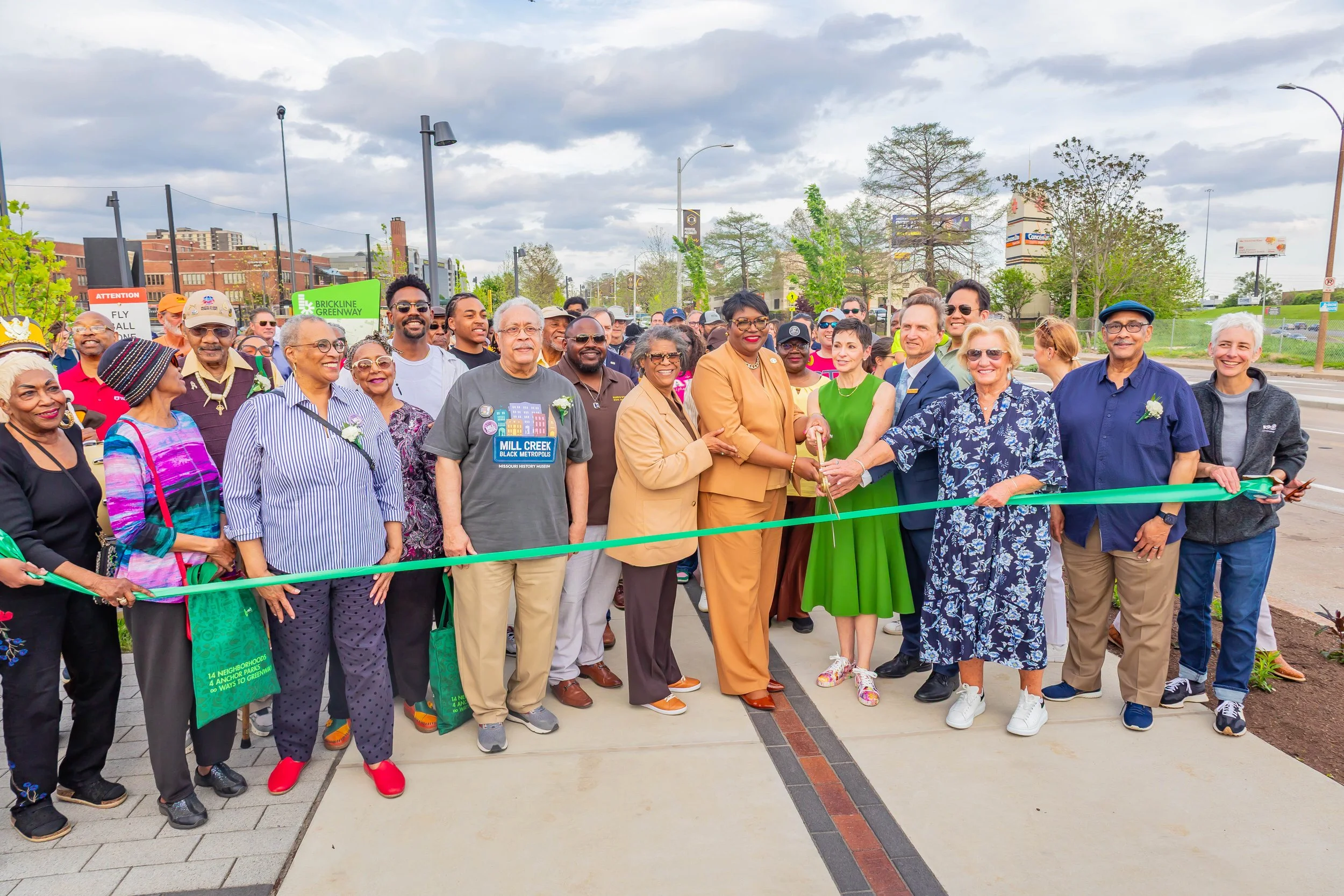
On Monday, April 13, a transformative new chapter in St. Louis connectivity and community development officially began with the opening of a key segment of the Brickline Greenway in Midtown—an initiative led by Great Rivers Greenway. As part of the celebration, a portion of the greenway adjacent to campus was officially designated as the LaTonia Collins Smith Plaza, honoring the leadership and impact of LaTonia Collins Smith.
This milestone marks more than the expansion of a pedestrian and bike-friendly pathway. It represents a powerful investment in access, equity, and the reimagining of how people move through—and connect with—the city.
Connecting Harris-Stowe to Opportunity
Strategically positioned near Harris-Stowe State University, the newly opened greenway enhances accessibility for students, faculty, staff, and the surrounding community. The pathway provides a safe, vibrant corridor for walking, biking, and engagement—linking campus to cultural institutions, businesses, and neighborhoods across Midtown.
For Hornet Nation, this is more than infrastructure—it is an extension of the campus experience. The greenway creates new opportunities for wellness, community interaction, and exploration, reinforcing the University’s commitment to student success both inside and outside the classroom.
Honoring History While Building the Future
The Brickline Greenway also carries deep historical significance. Portions of the pathway trace land once part of the historic Mill Creek Valley—an area that was home to a thriving Black community before being displaced in the mid-20th century.
Today, this revitalized space stands as both acknowledgment and advancement—a visible commitment to honoring the past while investing in a more inclusive future for St. Louis.
A Citywide Vision in Motion
The Brickline Greenway is part of a larger vision to create a network of connected pathways across the region, ultimately linking neighborhoods, parks, and institutions throughout the urban core. As development continues, the greenway will serve as a unifying thread—bringing people together while promoting sustainability, mobility, and economic growth.
Students —
What Does This Mean for You?
Expanded learning beyond the classroom
The greenway creates opportunities for experiential learning across disciplines—from urban planning and environmental science to history and social justice—bringing coursework to life in real timeA direct connection to culture and community
Immediate access to Midtown’s cultural institutions, public art, and local businesses allows students to engage more deeply with the creative and cultural heartbeat of St. LouisA living connection to history
Situated along the historic Mill Creek Valley, the greenway offers space for reflection, storytelling, and continued learning about the legacy and resilience of Black communities in St. LouisSafe, accessible spaces for wellness and movement
Designed for walking, biking, and gathering, the pathway supports physical and mental well-being while encouraging an active campus lifestyleGreater access and mobility
Easier navigation between campus and surrounding resources enhances independence, convenience, and overall student experience